TL;DR: Professional deodorization removes odor at its source, not just over it. Technicians identify what’s trapping the smell (char, saturated subfloor, contaminated insulation) and pair removal with equipment like hydroxyl generators, ozone shock treatment, thermal fogging, or HEPA air scrubbing. Most residential jobs take one to three days, depending on how deep the odor has soaked into porous materials.
If a Ballinger kitchen fire went out weeks ago but the smoke smell still hits you at the front door, or a back bedroom near the Colorado River flood line has smelled musty since spring runoff, scented plug-ins and open windows probably haven’t solved anything. Lingering odor after a cleanup almost always means the source material, like scorched drywall, a wet subfloor, or soot-coated HVAC ductwork, is still releasing odor compounds. No amount of air freshener fixes that. It has to be removed or neutralized at the material level.
What Does Professional Deodorization Actually Do?
Professional deodorization identifies and removes the odor-causing material first, then uses targeted equipment to break down the odor molecules left behind in air, flooring, drywall, and contents. It’s a two-step process, not a single spray-and-done treatment.
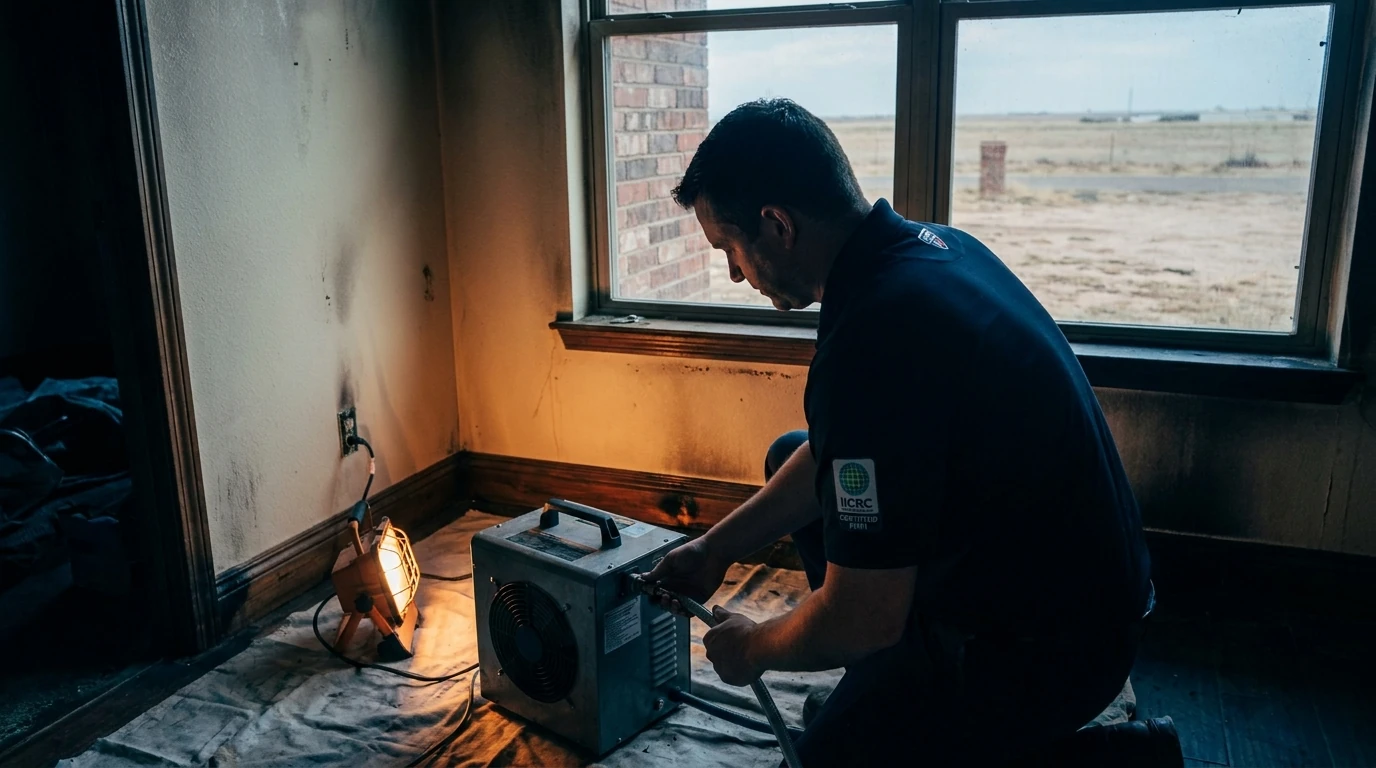
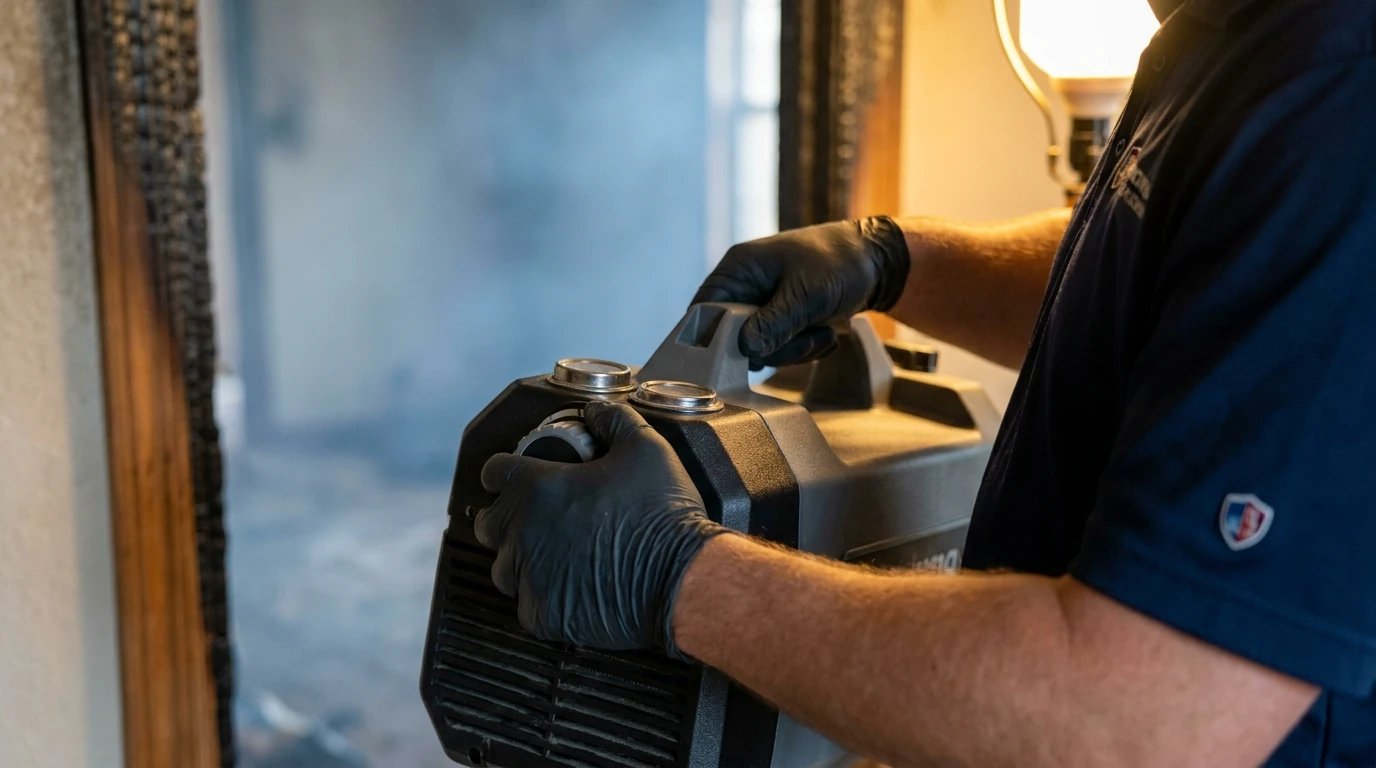
Masking agents (candles, sprays, plug-ins) layer a new scent over the old one. They don’t change the chemistry of what’s causing the smell, so the odor comes back once the fragrance fades, often stronger after heat or humidity reactivates it. True deodorization works differently. Hydroxyl generators produce hydroxyl radicals that oxidize odor compounds safely, even while people and pets are in the space. Ozone generators do something similar but far more aggressively, and because ozone is a lung irritant at effective concentrations, those treatments run in a sealed, unoccupied space, a point the EPA addresses directly in its guidance on ozone-generating air cleaners. Thermal fogging uses heat to carry deodorizing agents into the same tiny cracks and pores smoke originally penetrated, which is why it works well on wood trim, cabinetry, and wall cavities that sprays can’t reach.
The standard restoration crews work against for all of this is the IICRC S500 and S520 documents, which set the structural drying and remediation framework that makes deodorization actually hold.
How Do Crews Treat Smoke, Water, and Sewage Odors Differently?
Each odor source needs a different removal step before deodorizing even starts, because the molecule causing the smell is chemically different in each case. Treat them all the same way and the odor usually comes back within a few weeks.
For smoke and fire odor, soot and char have to come off walls, ceilings, and contents before any fogging or hydroxyl treatment begins, since soot residue keeps releasing odor compounds as long as it’s sitting on a surface. Porous items like upholstered furniture or drapes sometimes need content-specific cleaning or disposal if the smoke soaked all the way through. If a fire is the reason you’re reading this, our fire damage restoration process post walks through that sequence in more detail.
For water-damage odor (the musty smell after a slow leak or flood), the material has to be fully dried, usually with air movers and a dehumidifier running several days, and often treated with an antimicrobial before any deodorizing starts. Deodorizing a space that’s still damp just hides active microbial growth instead of stopping it.
For sewage and Category 3 water odor, decontamination comes first, full-stop. That’s black water, and the IICRC classifies it as grossly contaminated, meaning affected porous materials typically get removed, not just cleaned. We cover what that classification means for cleanup in our post on Category 3 water damage. Deodorizing before decontamination is complete just circulates contaminated air.
How Long Does Deodorization Take to Work?
Most residential deodorization jobs run one to three days, depending on how many porous materials absorbed the odor and whether the HVAC system needs treatment too. A single room with a contained source clears faster than a whole-house job where smoke or moisture reached the ductwork.
A few things stretch the timeline. Carpet, carpet pad, and insulation hold odor longer than hard surfaces and sometimes need replacement rather than treatment. If the HVAC system pulled smoke or musty air through the return ducts, the ductwork itself needs cleaning, otherwise the system just redistributes the smell every time it runs; our air duct cleaning service handles that piece specifically. Larger square footage and higher humidity (common in Runnels County during the wetter spring months) also slow hydroxyl treatment, since the equipment is working against more air volume and more ambient moisture.
A technician doing a walkthrough can usually tell within the first few minutes whether you’re looking at a one-day fogging job or a multi-day project that includes material removal.
What Should You Do Next If the Odor Won’t Go Away?
Schedule a professional odor assessment rather than buying another air purifier. A trained technician traces the smell to its actual source, often hiding in a wall cavity, subfloor, or duct run that’s invisible during a normal walkthrough.
Bring documentation if the odor is tied to a fire, storm, or plumbing claim. Insurance carriers typically cover deodorization when it’s part of a covered loss, but they usually want it itemized separately from general cleaning on the scope of work. A written assessment before treatment starts protects that part of the claim.
Air Care Restoration runs IICRC-certified deodorization as part of our odor removal service across Abilene, Ballinger, and the surrounding Big Country area, and we’re available 24/7 for jobs tied to an active fire or water loss. For standing odor with no recent incident, a scheduled assessment works just as well and usually costs less than guessing with equipment rentals.
If the smell traces back to standing water or a slow leak rather than smoke, our water damage restoration team handles the drying and antimicrobial work that has to happen before deodorizing will actually hold.
About Air Care Restoration
Air Care Restoration is an IICRC Certified Firm serving Abilene, TX and the surrounding Big Country region, including Ballinger, Sweetwater, and Clyde. The company holds a Texas Mold Remediation Contractor License (MRC2262) through the Texas Department of Licensing and Regulation and operates on a 24/7 emergency response schedule. Air Care Restoration handles water damage restoration, fire damage restoration, mold remediation, sewage cleanup, odor removal and deodorization, and related reconstruction services for residential and commercial properties across West Texas.